

The rapid growth of artificial intelligence, automation, cloud computing, and digital transformation has made data one of the most valuable assets for businesses. Every click, purchase, customer interaction, and business transaction generates information that can help organizations make better decisions. However, data alone has little value unless professionals know how to interpret it. This is where a Data Science Course becomes an excellent choice for learners who want to build future-ready technical skills and pursue careers in one of today's fastest-growing technology domains.
Choosing the right course, however, involves more than simply selecting the one with the longest syllabus or the lowest fee. Understanding what data science involves, the skills you will develop, and how those skills apply to real-world business problems can help you make an informed decision that aligns with your career aspirations.
Understand What Data Science Really Involves
Many beginners assume data science is only about programming or mathematics. In reality, it is an interdisciplinary field that combines statistics, programming, business understanding, and machine learning to solve practical problems.
Data scientists work with large volumes of structured and unstructured data to identify trends, develop predictive models, and support intelligent decision-making. Their work helps businesses improve customer experiences, forecast demand, detect fraud, optimize operations, and automate complex processes.
A well-designed Data Science Course introduces learners to this complete workflow instead of teaching isolated software tools.
Look for a Curriculum That Covers Industry-Relevant Skills
Technology evolves rapidly, so an outdated syllabus may not prepare learners for current industry expectations.
A comprehensive curriculum should include topics such as:
- Python Programming
- Statistics for Data Science
- SQL and Database Management
- Data Visualization
- Machine Learning Fundamentals
- Data Preprocessing
- Exploratory Data Analysis
- Model Evaluation Techniques
- Business Problem Solving
- Introduction to Artificial Intelligence
These subjects provide learners with a balanced understanding of both technical concepts and practical business applications.
Practical Learning Should Be a Priority
One of the biggest differences between an average training program and a career-focused course is practical exposure.
Learning data science requires regular experimentation with real datasets rather than simply reading theory. Practical assignments help learners understand how to clean data, identify patterns, build predictive models, and present findings clearly.
Before choosing a course, check whether it includes:
- Hands-on projects
- Case studies
- Capstone projects
- Industry datasets
- Portfolio development
- Problem-solving exercises
These experiences strengthen both technical confidence and analytical thinking.
Evaluate the Learning Methodology
Different learners have different learning preferences. Some understand concepts better through classroom discussions, while others prefer project-based implementation.
An effective Data Science Course should combine:
- Conceptual learning
- Live coding sessions
- Practical assignments
- Interactive doubt-clearing sessions
- Industry case studies
- Regular assessments
- Project reviews
This balanced approach enables learners to apply theoretical knowledge to practical scenarios.
Consider the Tools Used During Training
Modern organizations use a variety of tools throughout the data science lifecycle.
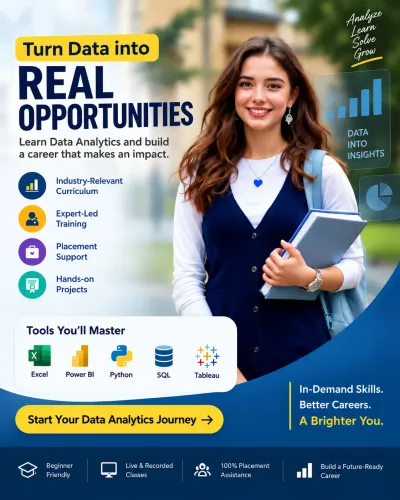
While comparing different programs, check whether learners gain exposure to technologies such as:
- Python
- Jupyter Notebook
- Pandas
- NumPy
- Matplotlib
- SQL
- Power BI
- Machine Learning Libraries
Understanding these tools improves readiness for internships and entry-level technical roles.
Think Beyond Immediate Job Opportunities
Although many learners choose data science because of growing employment opportunities, the long-term benefits extend much further.
Learning data science develops transferable skills such as:
- Critical thinking
- Logical reasoning
- Statistical analysis
- Problem-solving
- Business decision-making
- Data interpretation
- Communication through visualization
These competencies remain valuable across finance, healthcare, manufacturing, retail, education, logistics, insurance, and information technology.
Why Learners in RS Puram Are Exploring Data Science
RS Puram is one of Coimbatore's established educational and commercial neighbourhoods, attracting students, graduates, and working professionals who are keen to build technology-oriented careers. With easy connectivity to academic institutions, IT companies, and business centres across the city, learners from RS Puram increasingly seek structured programs that provide practical exposure alongside theoretical knowledge. As businesses across Tamil Nadu continue adopting data-driven decision-making, professionals equipped with data science skills are finding opportunities in a wide range of industries.
Questions to Ask Before Enrolling
Before selecting a Data Science Course, consider asking:
- Is the curriculum updated regularly?
- Does the course include practical projects?
- Will I build a professional portfolio?
- Are modern industry tools included?
- Is mentorship available throughout the learning process?
- Does the program encourage problem-solving instead of memorization?
- Are learners exposed to real business scenarios?
Answering these questions can help identify a course that supports long-term career development rather than short-term learning.
Institutions such as Vinsup Skill Academy focus on career-oriented technology education by combining practical implementation with industry-relevant concepts. This approach enables learners to understand not only how data science tools work but also how they are applied to solve real business challenges.
Choosing the right Data Science Course is an investment in continuous learning rather than a single certification. Technology continues to evolve, and successful professionals are those who consistently build their analytical skills, stay updated with emerging trends, and apply their knowledge to real-world situations. By selecting a program that emphasizes practical learning, structured guidance, and industry relevance, learners can develop a strong foundation for a successful career in the rapidly expanding field of data science.